Space as a test of civilisation: Will the race to the stars unite or divide humanity?

Author: Diplo Team
Roots of cooperation in outer space
Since humanity’s earliest attempts to conquer outer space, it has become an entirely new arena where the world’s strongest nations, and later, even private companies, compete for supremacy. It is a critical test of whether we can overcome the competitive patterns. During the late 1920s and 1930s, the first intellectual fathers of space travel outlined an enthusiastic vision for the future. This would be a time of cooperative and transnational human impulse, described as ‘ultrasocial’. During the Cold War, outer space became a key battleground where the two superpowers fought for scientific and technological dominance.
Although this period was marked by significant global crises, intensified proxy conflicts, and even the ominous spectre of a Third World War, as glimpsed during the Cuban Missile Crisis in 1962, it is noteworthy that outer space never transformed into an actual theatre of war. Space was, more or less, out of the real wars of the day. The weapons in space at the time belonged more to the realm of science fiction than reality, and opening a new front was not economically profitable. This combination of many technological and physical constraints rendered space a surprisingly peaceful arena throughout the Cold War. In quite a few cases, the cooperative events in space, such as the historical Apollo-Soyuz mission, worked to lower tensions and to improve relations between the adversarial superpowers.
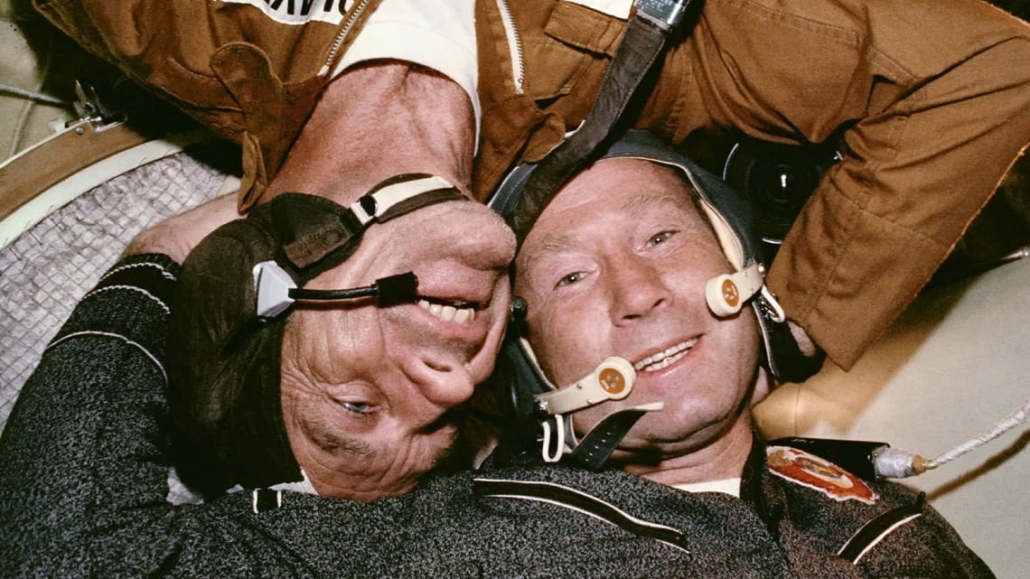
The emblematic handshake in outer space between American astronauts and Soviet cosmonauts, which took place during the joint Apollo-Soyuz program in 1975, was a clear example of cooperation between rival nations. The docking of the US Apollo module with the Soviet Soyuz capsule was successful. The three American astronauts and two Soviet cosmonauts ran both joint and separate scientific experiments. One of the experiments involved deliberately blocking the Sun’s rays by the Apollo module, which allowed the instruments on the Soyuz spacecraft to capture the solar corona. This cooperation brought a wealth of experience that was later used as a model for the US-Russian joint space projects, especially the Shuttle-Mir program and the International Space Station (ISS) in the 1990s.
The most crucial and principal agreement on outer space was signed in 1967, with the formal name “Treaty on Principles Guiding the Activities of States in the Exploration and Use of Outer Space, including the Moon and Other Celestial Bodies.” This agreement has become universally known simply as the Outer Space Treaty, which emerged as a product of the basic consensus among the superpowers. The Outer Space Treaty enshrines the non-sovereign status of outer space, which can not be the object of national possession. Although this treaty does not aspire to demilitarise outer space, it established a foundational framework for cooperation between geopolitical rivals during the Cold War, and particularly following the dissolution of the Soviet Union.
The golden age of cooperation
The Shuttle-Mir Program of the 1990s was the major experimental link between Cold War tensions and orbital partnership. The initiative brought American astronauts and Soviet cosmonauts into operational collaboration, creating the mechanisms for medical certification, crew protocols, and crisis management. Experts from both countries developed common ways to test the health of the crew, to manage medical emergencies in microgravity and to achieve harmonious communication in complex operations. The success of the program, as demonstrated through multiple dockings and crew rotations, validated a critical principle: cooperation could actively reshape bilateral relationships through shared achievement and mutual dependency.
In 1992, an agreement was signed between the Russian Federation and the United States on Cooperation in the Exploration and Use of Outer Space for Peaceful Purposes. The 1992 Agreement granted legal recognition to bilateral space activities and established the guidelines for scientific exchange. The treaty marked a significant transition in the superpowers’ strategic relationship, implying that even the most intense rivalries could still give way to a partnership based on shared interests when technological ambitions coincided with mutual interests.
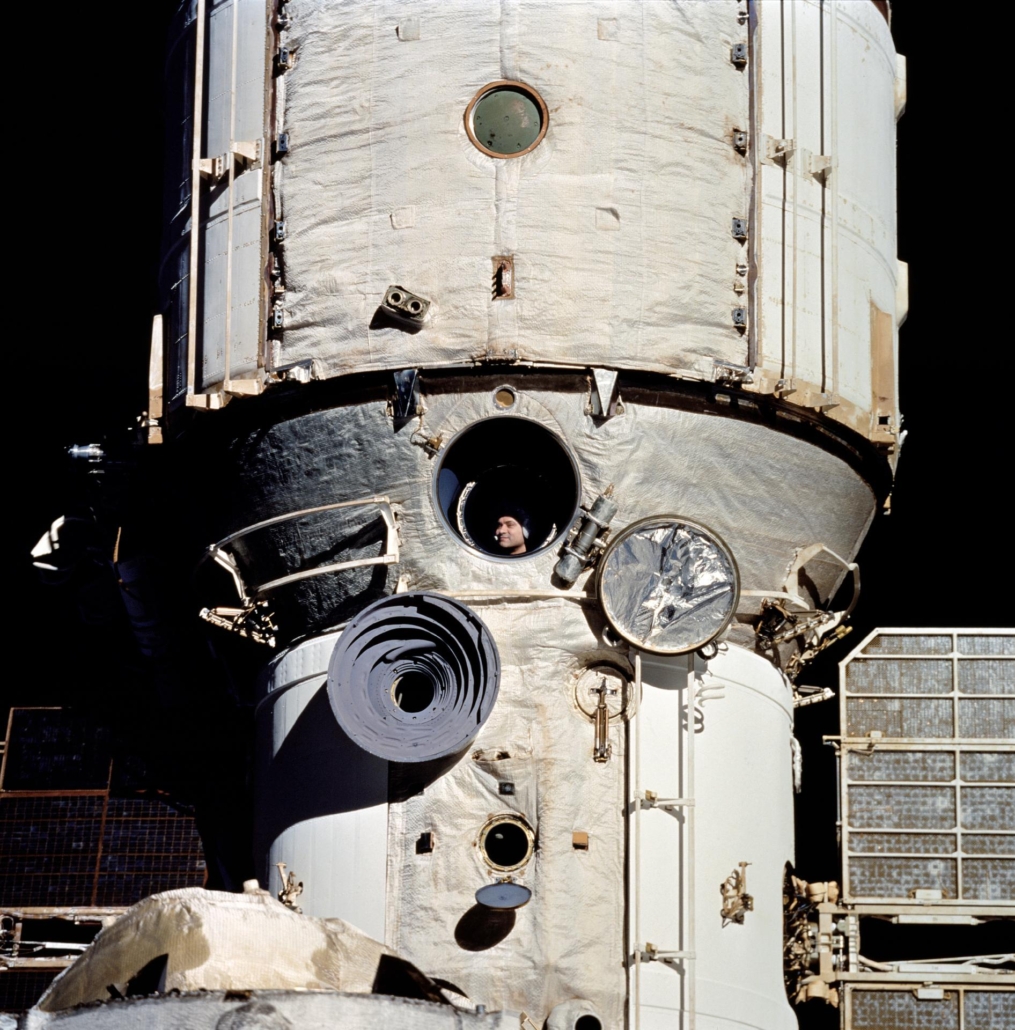
The International Space Station (ISS) represents the most comprehensive model of sustained international cooperation, involving 16 countries, including Russia, the United States, Japan, Canada, and Brazil, as well as 11 member countries of the European Space Agency. The Russian Soyuz spacecraft remains the most reliable tool for crew rotation, while the Americans are responsible for cargo supply, power infrastructure, and laboratory capacity. This technical partnership turned theoretical diplomatic agreements into a real operational necessity. The ISS would not be able to carry out its function without Russian launch capabilities, and also without American life support systems. By bringing Canada, the European Space Agency, Japan, and other international partners, along with Russia and the US, the architects of the ISS made US-Russian cooperation part of the framework that underlined consensus decision-making, transparent procedures, and explicit non-weaponisation norms.
The ISS partnership proved remarkably resilient and survived the 2014 Crimean crisis, permanent NATO tensions, sanctions, and other significant geopolitical deteriorations that led to the end of cooperation in various sectors. The ISS continued functioning productively even during the war in Ukraine. This extraordinary resilience proved that space collaboration had gained institutional depths strong enough to withstand temporary political crises, creating what the researchers call ‘complex interdependence’ in which the costs of breaking cooperation are much higher than the benefits of pursuing a unilateral path.
The war in Ukraine and space diplomacy
The war in Ukraine has led to a crisis in relations between the West and Russia that was not seen even in the Cold War era. The countries of the European Union are flirting with a direct entry into the war, which could lead the world to a nuclear cataclysm. At a time when virtually every channel of cooperation between the United States and Russia remains frozen due to sanctions, partnership in orbit continues to endure. In November, the Soyuz MS-28 spacecraft was launched from Baikonur, transporting two Russian cosmonauts and one American astronaut to the ISS.
Although the US has its own launch capabilities through SpaceX, there is still an occasional need to purchase a ticket for its astronauts on the Russian Soyuz. Despite the war in Ukraine, outer space remains one of the few bridges between Russia and the West. Although the consequences of the disturbed relations are felt in Earth’s orbit as European astronauts are not allowed to enter the Russian modules due to rules now in force, the shared oxygen, toilet, and life support systems on the ISS can only function if all crew members contribute.
Russia initially announced its withdrawal from the ISS by the end of 2024, but the departure date was later extended to 2030. So, another 5 years is the guaranteed period of cooperation between Russia and the West in outer space, before the deorbiting of the entire complex. Russia plans to build its own space station, as does the US. China has already asserted itself in this regard, as it is the only country today with its own space station. Regardless, China cooperates with Russia in a project that hopes to build a lunar base (International Lunar Research Station).
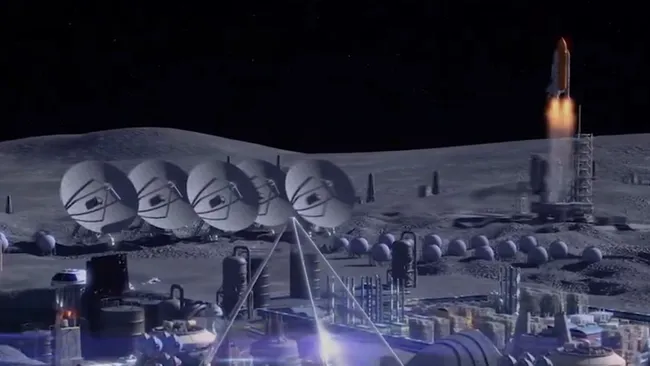
The key question is not whether some cooperation in outer space between the warring parties will continue, but whether conciliatory space diplomacy will spill over into other social fields. The ISS and Tianwen-1, operating simultaneously from 2020 to 2024, exemplify two different models. The first represents institutionalised cooperation that transcends national competition, and the other represents national achievement pursued autonomously. Whether the future trajectory follows the ISS model of deepening multilateral integration or the Tianwen-1 model of proliferating independent national programs remains the central historical question determining whether space will unite or divide humanity.
American negotiators, including Trump’s billionaire friend Steve Witkoff and son-in-law Jared Kushner, are holding talks with their Russian counterparts to achieve peace in Ukraine. Their basic premise is that “borders are less important than business”. This approach completely contradicts the traditional state apparatus that perceives Russia as an enemy. We observed that the new National Security Strategy of the United States acknowledges Russia as a potential partner. According to The Wall Street Journal (WSJ), a high-level proposal was conveyed by Kirill Dmitriev, a key negotiator for President Putin. Dmitriev reportedly suggested repurposing the approximately USD 300 billion frozen Russian assets held in Western jurisdictions to fund a joint investment and reconstruction program for Ukraine. The scope of the proposed cooperation was notably expansive, extending beyond Ukraine to include the joint development of Arctic mineral resources and, in the realm of outer space exploration, a potential collaborative mission to Mars involving Elon Musk’s SpaceX.
While most Russian officials are under sanctions from the White House, the head of Roscosmos, Dmitry Bakanov, is not. In July, he visited NASA’s centres (Johnson Space Center and Kennedy Space Center), and SpaceX’s and Boeing’s facilities. Apart from continued cooperation in the ISS, it is not known what Bakanov discussed with his fellow NASA director. The WSJ notes that for many in Trump’s administration, blurring the line between business and geopolitics is not a disadvantage, but an advantage. Key Trump advisers see the possibility for American investors to conclude lucrative deals in the new, post-war Russia and thus become commercial guarantors of peace. In conversations with Witkoff and Kushner, Russian officials made it clear that American business will be a priority over competitors from Europe, whose leaders have “lost touch with reality”. Outer space offers enormous potential for commercial activities, so joint US-Russian projects in its exploitation are apparently on the diplomatic table all the time.
Author: Bogdan Stojanović
Click to show page navigation!