Register now to reserve your place in our specialised spring courses!
👉🏼 Application deadlines for certificates issued by Diplo: 30 March 2026
For further information and to apply, click the course titles above or visit Diplo Academy’s course catalogue.
◆ Need financial assistance? Scholarships are available!
Thanks to support from the government of Malta, partial scholarships are available for applicants from developing countries to attend upcoming Diplo online courses. These scholarships cover 30%–60% of course fees and can be applied to most 2026 online courses. Browse our course catalogue and contact us at admissions@diplomacy.edufor further information.
Upcoming events
◆ Technology Innovations for Creative Diplomacy (18 Mar.)
The webinar Technology Innovations for Creative Diplomacy seeks to examine the impact of technological innovation on diplomatic practice, showcase creative applications of digital tools in public diplomacy and international engagement, and share practical experiences from technology-driven initiatives. It also aims to foster dialogue among key stakeholders on the opportunities, risks, and capacity needs in digital and creative diplomacy.
Join us on 18 March, 13:00–14:30 UTC (16:00–17:30 EAT / 14:00–15:30 CET). Learn more and register!
Blogs and publications
◆ Digital sovereignty stack: Infrastructure, services, data, and AI knowledge
Digital sovereignty may be maximised through isolation, but that is not a viable path for open societies. So how can states protect vital interests while remaining globally connected? Read the blog post!
◆ Do problems or solutions have ‘root causes’?
What really causes what? Wars, crises, revolutions – and even AI. Read the contrarian dive into how we hunt for ‘root causes’, and why the answers are not what we expect. Read the blog post!
◆ Automated exclusion: The crisis of inaccessible AI for persons with disabilities
In the global rush to regulate AI, a dangerous consensus seems to have formed: that the real drama of AI lies in the future – in existential risks, deepfakes, or algorithmic bias. But for persons with disabilities, the crisis of AI is already here, and it is older than the technology itself. It is the story of being told a system is efficient and modern, only to find the door locked from the inside. Read the blog post!
◆ Digital ghosts
Passing personal data to survivors or legal representatives raises significant legal and technical challenges. This blog post examines digital inheritance today and highlights gaps in the rules governing the ‘right to be forgotten’ after someone dies. What steps should international policy take to manage digital remains and protect privacy and data security? Read the blog post!
◆ Wars that outlast attention: The role of humanitarian diplomacy
Diplomacy tends to orient itself around moments of rupture. A front collapses, a capital falls, a ceasefire breaks down. These are events that demand statements, envoys, and summits. Sudan and Yemen do not conform easily to this rhythm. Their wars have unfolded over years, producing humanitarian crises of immense scale without providing a single moment that forces sustained international reckoning. Read the blog post!
◆ After universality: Ubuntu, AI governance and the problem of moral monoculture
Can AI ethics truly be universal? Or are we quietly building a global moral monoculture into our machines? This blog explores how ideas like Ubuntu challenge dominant AI governance narratives, and why pluralism may matter more than universality. Read the blog post!
◆ The necessity of failure in the age of AI
We are building AI to be absolutely flawless, but what happens when we forget how to fail? As we push for perfect efficiency, we might lose what makes us adaptable: the freedom to make mistakes. Failure is not just an error in the system. It is how we learn, generate new ideas, and become stronger. If we let algorithms handle all our problem-solving, and they never make mistakes, we could lose our own ability to recover when things go wrong. Read the blog post!
◆ Diplomatic fatigue: When the world tires of unfinished wars
Conflicts turn most lethal when the world grows bored with them. In this analysis, we explore diplomatic fatigue, the silent transition in which a crisis moves from a ‘problem to be solved’ to a ‘condition to be managed’. When the spotlight fades, the architecture of indifference takes over, leaving warlords to rewrite the rules. Read the blog post!
◆ Ephemera VI: Reflections on change, correctness, and art
In ‘Ephemera VI’, the author revisits the myth of the ‘Chinese curse’, the unintended consequences of political correctness, and the sterile narcissism of modern performance art. Read the blog post!
◆ Against ‘takeaways’
If we reduce policy debates to short ‘takeaways’, how does this influence the way readers analyse and question arguments? Read the blog post!
◆ AI ethics as societal infrastructure in the digital era
Balancing technological progress with societal values is essential, ensuring that intelligent technologies align with societal values and remain guided by AI ethics. Read the DW analysis!
◆ Anthropic’s Pentagon dispute and military AI governance in 2026
Military AI is moving from theory to practice, and Anthropic’s Pentagon dispute shows how contested its limits have become. Read the DW analysis!
◆ DW Weekly #253: Measuring hate’s footprint
In the latest issue of the DW Weekly newsletter:
Measuring hate’s footprint
Meta reopens WhatsApp to third-party AI Chatbots amid EU pressure
◆ Digital Watch newsletter – Issue 107 – February 2026
In our February 2026 issue, child safety online takes centre stage as landmark US platform trials begin, and countries weigh social media bans for minors. We examine why the ‘cyberspace is a separate world’ myth still shapes AI governance today, plus Anthropic’s Pentagon exile over ethical safeguards. Digital sovereignty trends intensify as Europe pursues strategic autonomy, and Washington pushes back. We also preview ten key signposts on the road to the 2027 Geneva AI Summit. Read Digital Watch Monthly #107!
Cette publication est disponible aussi en français.
◆ ConfTech Digest #56, February/March
Read the latest from the world of online meetings: AI-powered tools, meeting experience improvements, and stronger security features. Read ConfTech Digest #56!
Latest videos
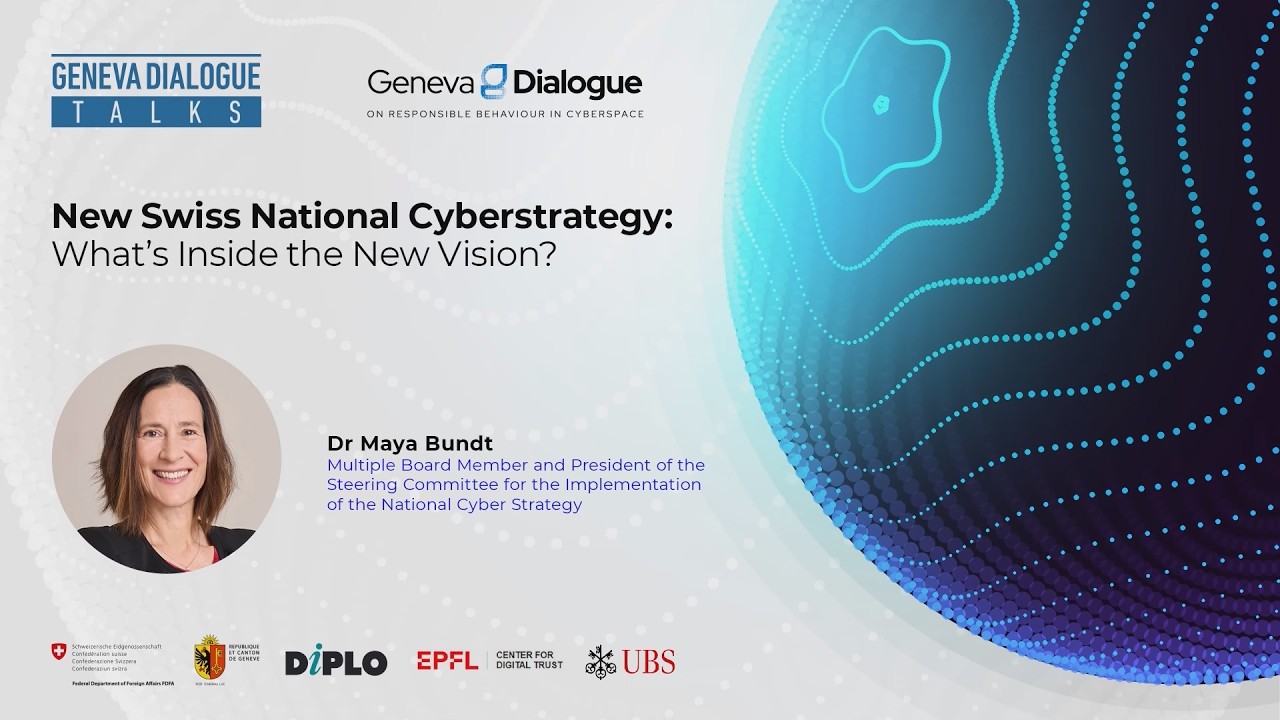
◆ Geneva Dialogue Podcast #9: New Swiss national cyberstrategy: What’s inside the new vision?
Strategy on paper is one thing. Translating it across institutions, responsibilities, and a rapidly evolving cyberthreat landscape is another. In this conversation, we explore what it takes to turn national cyber strategy into practice: how it is developed, who shapes it, and how decision makers navigate trade-offs between security, economic interests, openness, and neutrality.
Don’t miss…
◆ Cúpula de IA de Nova Déli: Retórica inclusiva, realidade fragmentada
In her article, Diplo’s Marília Maciel analyses how the New Delhi AI Summit sought to shape global AI discourse by recentering it on development and inclusion. Yet beneath a tapestry of inclusive rhetoric, the summit also laid bare the deepening fractures in global AI governance. Read the article!
◆ New book: Ambassadors, Journalists, and Spies
Professor G.R. Berridge’s new book, Ambassadors, Journalists and Spies: From Ancient Greece to the Present Day, has just been published. The volume unites three of his major works, mapping the long history of diplomatic practice from early state relations before foreign ministries, through the troubled career of a Victorian diplomat, to the fraught ties between diplomats and intelligence services. Order your copy!