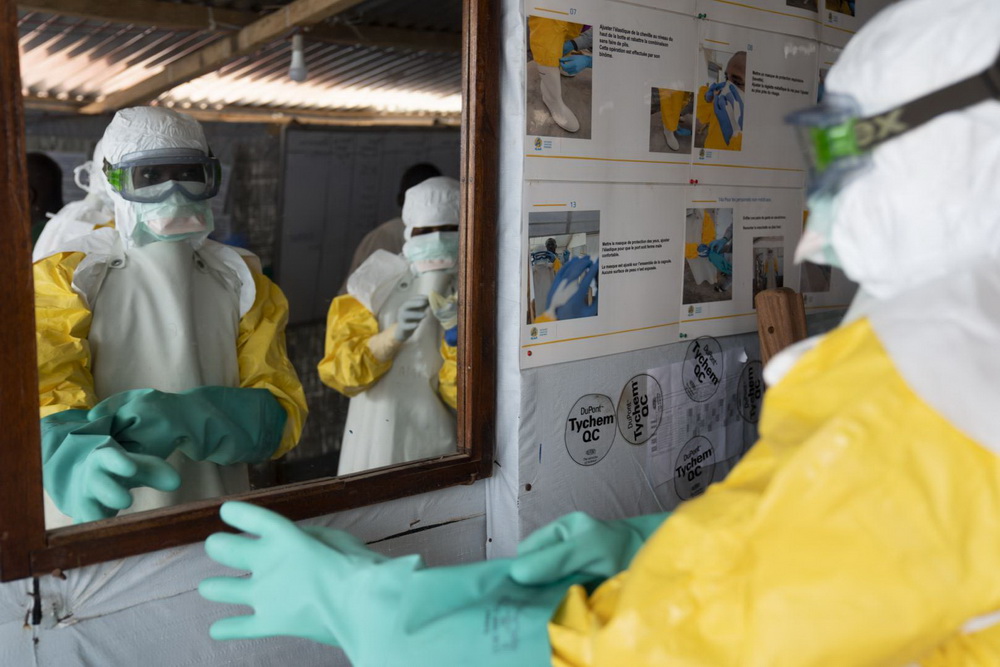
An Ebola epidemic has been foregrounded recently. A discussion has emerged on how to treat patients with currently available experimental drugs. Going over the arguments is interesting, for it sheds uncertain light on our capacity to think rationally.
At the core, the argument is that the experimental drug should have been administered within the framework of a ‘controlled’ experiment (it was not) to obtain information on its effectiveness. In such a ‘well-designed’ experiment, society can extract information which would be useful for further research.
The downside of such an experiment is that some of the patients will be given placebos, whose characteristic is that they are ineffective. Allocation to the treated or non-treated group occurs at random, so no patient is specifically targeted (the matter is complicated in the specific instance by the fact that there was not enough of the experimental drug to go around: the ethics would have simplified. For the current discussion, however, this singularity is best discarded).
Admittedly, we do not know for sure whether the drug is effective. We are making, however, an informed guess, so the likelihood of a benefit is greater than that of the placebo, which by definition is nil. The design of the experiment implies that some patients may not receive the benefits, however limited, of the drug. In other words, the ‘control group’ does not get the ‘best possible treatment’ in order for society to extract information which will not benefit them, but rather future patients.
This description frames the ethical conundrum in terms of the well-known ‘trolley problem’ (see Would You Kill the Fat Man? The Trolley Problem and What Your Answer Tells Us About Right and Wrong by David Edmonds), over which philosophers have agonised in the last 50 years. The recipients of ‘placebos’ are the ‘fat men’, while future patients who, hopefully, will get a better drug are those ‘saved’ from the disease-trolley.
We have pitted the rights of ‘society’ against the rights of the ‘autonomous individual’. We may weasel out of the conundrum by asking all participants in the group to voluntarily take the risk of not receiving treatment. In the past, however, we coerced soldiers to risk death in battle, so ‘the nation could live’ (if we have moved to an all-volunteer army, it is not from ethics, but from necessity: high-end war technology requires training beyond the capacity of civilian recruits to absorb).
Utilitarians would argue for maximising ‘social utility’ and coercing patients into the experiment. The expected social benefits are far greater than the individual loss. Human rights principles would deny the state (or the medical profession) the right to coerce – the tyranny of the majority – too bad if the information we might get is lost. The precautionary principle would tend to favour this second position, for ‘saving lives’ would trump rational experiment.
Presented in such stark terms, the problem has no ‘rational’ solution. After a century of arguing that the individual has to submit to society, the pendulum has simply swung the other way: the individual has inalienable rights.
Any way out of the self-imposed conundrum would lie in managing, not resolving, the tension. How to find a way out?
Experimental philosophy (X-philosophy) simulates the trolley problem for people and simply records uninformed attitudes. I am not sure that ex ante positions are of much help, though they may map the diversity of opinion and affirm what we know already, namely that we are all diverse.
Threshing philosophical straw more finely does not yield flour either, albeit a lot of rhetorical dust.
The way forward is discernment: adaptation of ‘guidelines’ to context and circumstances. It is a move away from ‘essence’ and back into the realm of contingency (an irony for philosophical essentialists). The outcome is closure, not truth. Closure is a sufficient precondition for policy action, even in the absence of truth or ‘best practice’.
My take would be to favour training in ‘discernment’. I would simulate real-life experience through a video game, where participants would gain a full sense of what it is to make decisions and face the – often unexpected – consequences. I would recommend that, in light of the Ebola experience, the WHO develop such a ‘health policy simulator’. This would convey the complexity of decision-making efficiently and teach ‘tension management’.
This post was first published on DeepDip.
Explore more of Aldo Matteucci’s insights on the Ask Aldo chatbot.