(My readings tend to be peripatetic, whimsical, and the prey of serendipity. I had started exploring the concept of virtue, which had come across my path in The Passions and the Interests by Albert O. Hirschman, when another book, Patterns of Moral Complexity by Charles E. Larmore, published in 1987, bought in 1996, and never read, fell on the floor as I was rifling through the library. Here is a makeshift reflection based on it and other texts that were drawn into my mental gyre.)
I became interested in virtue.
Virtue has a long and distinguished pedigree. Confucius’ teachings (551–479 BC) could be said to centre on virtue (‘Confucian thought focuses on the cultivation of virtue and maintenance of ethics. Some of the basic Confucian ethical concepts and practices include rén, yì, and lǐ, and zhì. Ren “humaneness” is the essence of the human being which manifests as compassion, it is the virtue-form of Heaven. Yi is the upholding of righteousness and the moral disposition to do good. Li is a system of ritual norms and propriety that determines how a person should properly act in everyday life according to the law of Heaven. Zhi is the ability to see what is right and fair, or the converse, in the behaviours exhibited by others.’). We find virtue first in Plato (Republic) – but surprisingly, it was a virtue of the state (though embedded in its ‘guardians’ and not in the οἱ πολλοί). Virtue was central to Aristotle as well – though he ended up preaching teleology. Virtue was fundamental in stoicism. Christian philosophy (Augustine, Ambrose, Thomas Aquinas) enlarged the concept, but then the subject matter somehow petered out – it became ‘soft’ as compared to ‘categorical’ philosophy. (Meanwhile we have a curriculum in ‘theoretical philosophy’, ‘practical philosophy’, and even ‘experimental philosophy’ (X-phi). So much for ‘physics-envy’.) I wondered why. Today, only neo-Aristotelians write about virtue (but mean something else) (see After Virtue: A Study in Moral Theory by Alasdair MacIntyre).
Reading in my disorganised fashion, I came to realise that virtue is not a categorical imperative or a transcendental value that I could define in words or place in a philosophical system. Virtue is a practice, a process to which we arrive through experience – Socrates called the process an ‘examined’ life. Like all practices, virtue defies definition.
There is nothing to do that is not singular.
One meal, one letter, one memory roaring inside the head.
Naomi Shihab Nye
I will use the example of an 800-year old bonsai to give a feel for what virtue entails.
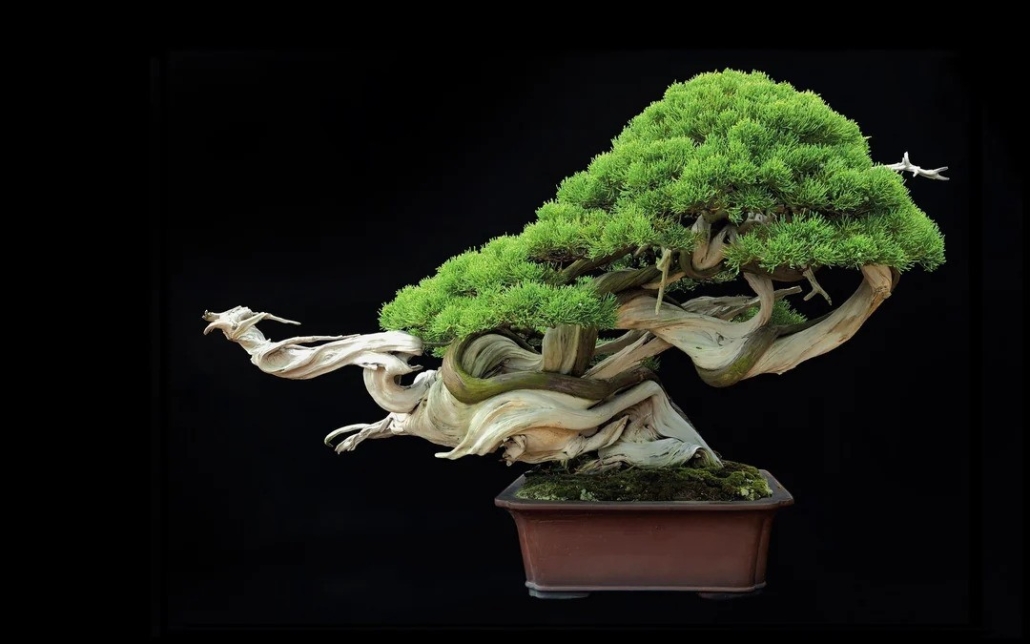
‘The Dance of the Flying Dragon’ or ‘Ascending Dragon’, is the name of one of the world’s most celebrated bonsai trees, created by the Japanese bonsai master Masahiko Kimura. (Reddit)
In 1983, Masahiko Kimura obtained an about 800 years-old collected Sargent juniper (it was 173 cm high and had one long heavy root extending approximately 122 cm). After studying the tree for two years, Kimura began work by coiling the long root so it would fit into a container. After the tree recovered from the drastic reduction technique, he carved and formed the dead wood, which comprised 80% of the tree, into a sculpture, before wiring and shaping the live branches. Three years later, Masahiko Kimura completed and exhibited it. He commented: everything unneeded is eliminated, the essence of the masterpiece is extracted, and its beauty and feeling are condensed.
Jonathan M. Singer, Fine Bonsai: Art & Nature
One could go on for pages in describing the six-year process leading to the Ascending Dragon. I shall limit myself to elements I consider central, well aware, of course, that I am missing most of the process as it developed in the mind and senses of Masahiko Kimura.
The first element is harmony. Contrary to many a Western artist, who subdues brute matter to his imagination, Kimura approaches a living being – an 800-year-old tree – with which he aims to create an enduring harmony. His approach is very respectful of the ‘other’, whom he considers an equal partner (if not more). While Kimura has the initiative, he has to give the best of himself in the situation. He starts with a three-year-long action-less phase where inquisitiveness and deliberation prevail. Only then does he begin to shape and transform the bonsai over another period of three years. (Of course, this is not strictly true: the Western artist had to know his materials intimately in order to allow his vision to incarnate in it. Conceptual art has broken this last link. It is mind over matter. Contrast Kimura’s approach to that of Ai Weiwei, an international conceptual artist of Chinese origins. His installation Fragments 2005 consists of connected fragments of pillars and beams from hundreds-of-year-old dismantled Chinese temples. Here is how Ai described the development process: ‘I gave my assistants very vague instructions. I told them, “I need all those pieces reconnected.” It was a rather blurry programme, and eight of my carpenters worked independently for half a year to bring the installation to the present condition.’ (see Chinese Whispers: Recent Art from the Sigg and M+ Sigg Collections by Kathleen Bühler).)
Unique initial conditions and a multicausal process lead to a complex, unique, and unforeseeable outcome, which is this exquisite bonsai. The complexity is multi-layered. First is the even-handed encounter between the tree and its curator: just as in chaotic processes, the outcome critically depends on these initial conditions (see Complexity: The Emerging Science at the Edge of Order and Chaos by M. Mitchell Waldrop and Complexity: A Guided Tour by Melanie Mitchell). Furthermore, deliberations include many causes, some then rooted in unconscious mental processes (I am referring to the fact that only a minute fraction of our mental processes are conscious and explicit). This process flows in time: as it evolves, choices are made, options closed; the sequencing of these choices creates a distinctive path. Finally, one observes a relentless creative process, where Kimura does not simply apply ‘bonsai rules’, but adapts and develops them creatively.
I would like to linger for a moment on this last point. The ability to alter the environment and create suitable niches for survival is one of life’s fundamental characteristics.
Organisms play two roles in evolution. The first consists of carrying genes; However, organisms also interact with the environment, take energy and resources from the environment, make micro- and macro-habitat choices with respect to environment, construct artifacts, emit detritus and die in the environments, and by doing all these things, modify at least some of the selection pressures present in their own, and in each other’s local environments.
E. John Odling-Smee, Niche Construction: The Neglected Process in Evolution
It is also probably one major reason for social behaviour among living beings. Mankind’s specialty is that this process has become fully conscious and reflective, hence vaguely directed toward the imagination rather than being the result of adaptation. The ‘sapiens’ in homo sapiens of rights should be ‘inquisitive and innovative’. Being human is acting out phronesis: wisdom or virtue. It is a paradigm of reasoning and interpretation of texts.
The example of the bonsai was not educative – to show how a rule is applied – but analytical: I wanted to show constituents of the process of coming to judgment. There are as many judgments as there are situations and people in them. But these judgments are not random (or Brownian). They arise from complex, often chaotic processes, but still tend to form recognisable patterns of complexity, as Charles E. Larmore describes. Such patterns are guided by heuristics rather than strict rules.
The same is true in political or moral life. Larmore’s work has supported and clarified what I outline here, though the biological analogies are my own.
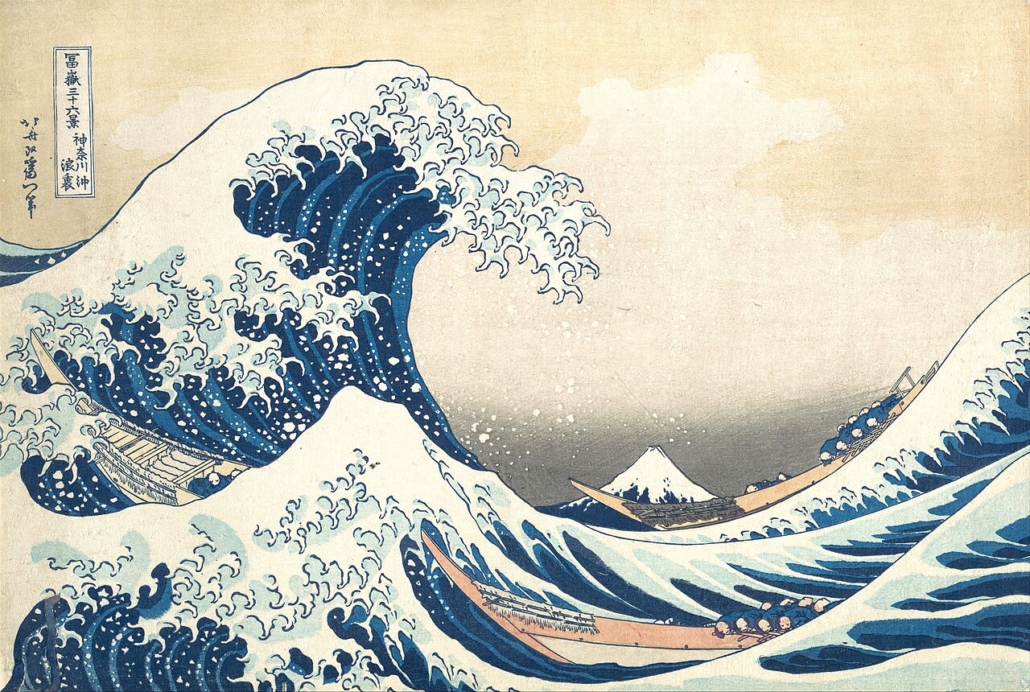
A key feature of wisdom is that means and ends cannot be cleanly separated; they are intertwined. This is worth noting for anyone familiar with the ‘principal–agent problem’. A principal may ask an agent to exercise judgement in a specific, contingent situation, but once in that situation, the agent will act according to judgement rather than mechanical instructions – and will inevitably bring personal perspectives into the process.
It is misguided, I believe, to treat a situation as merely ‘contingent’ and then jump straight to categorical or universal principles, as much of modern moral philosophy attempts. Such principles may offer reference points, but they are far too general to guide concrete action. They also tend to emphasise intended effects while ignoring unintended consequences. As Adam Smith, Frédéric Bastiat, and Max Frisch remind us, unintended consequences can be decisive. Human judgements may be imperfect, but they are not limited by the systematic blind spots of categorical rules.
Humans are both masters and prisoners of the situations they find themselves in. We feel this directly. Being engaged in a process – especially the creative part – gives us a deep sense of satisfaction, even when it is difficult. All ‘practitioners of the situation’ – the hunter pursuing his prey, the farmer at harvest, the artisan in his workshop, the scientist in the lab – experience this fulfilment, which is far greater than any financial reward. To take away the space for creative judgement, for example by imposing fixed ‘best practices’, is to take away something essential to what makes people feel alive.
The post was first published on DeepDip.
Explore more of Aldo Matteucci’s insights on the Ask Aldo chatbot.