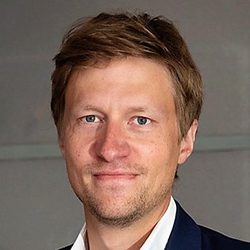
Text – Sasa Jenko
 The course was an inspiring experience that showed how science and tech diplomacy are building bridges across nations and disciplines. As someone deeply interested in responsible innovation, I found the course especially valuable. I highly recommend it to anyone eager to connect science, diplomacy, and innovation for a more resilient and inclusive world.
– Ms Sasa Jenko, Policy Coordinator, Policy and Strategy, DG SANTE, European Commission
 In the course, I discovered how much science has become crucial in the decision-making processes for UN organisations. I learnt how much they were advancing the agenda of scientific diplomacy, and in particular how UN agencies are leading efforts in science policy and in each of the member states, for instance, in developing new evidence-living frameworks. I was also impressed by the expertise of the people involved in sharing their experiences with us during the course, as well as the expertise of the course participants.
 The course was an excellent opportunity to expand my knowledge of how scientists and diplomats work together to address the most pressing global issues and the increasingly important role of scientists in engaging beyond the field of science. This is particularly relevant in the post-COVID-19 era and for rapidly emerging global health challenges such as antimicrobial resistance that require coordinated action, cooperation, and scientific-based policymaking.
 I loved the course methodology because it focuses on interaction rather than memorisation. It also provides a great opportunity for networking with scientists and diplomats. Personally, I found it very insightful and useful for guiding scientific cooperation policy in embassies.
 I thoroughly enjoyed the course, and each session left me with ‘Aha’ moments. The course content was well thought out and presented, including the reading material. The faculty and fellow classmates were truly inspiring. This course was a powerful reminder that alone, you can go fast, but together, you can go far. Whether at a national or global level, tangible progress and development will be achieved when we strategically apply diplomacy in science, and science in diplomacy to guide impactful knowledge and resource exchange, as well as informed policies.
 The course covers the main developments and also the current and critical issues raised at the interface of science and diplomacy. It also enabled us to practically identify and analyse the roles and impact of science diplomacy and diplomats. I really enjoyed the freedom that the online format allows, the precise structure and rich content, the level of interaction with diverse participants from all over the world, and the overall quality of the discussions with expert lecturers each week. I would definitely recommend it to anyone who would like to understand the importance of science diplomacy as an emerging field combining international relations and science.
 The course provides a great overview for professionals from various backgrounds spanning the private sector to diplomacy professionals and academics looking to expand their understanding of how the sciences can act as an important bridge between nations and cross-national interests.
 I learned a lot from scientific diplomats from different countries about concepts, trends, technological advances, and science, which makes the course a lever to enhance my professional development.
 This unique course provides a better understanding of science diplomacy while contributing to building capacity and stimulating engagement in the global community. I appreciated learning more about the international science-policy interface and interacting with the transdisciplinary community of scientists, policy-makers, diplomats, and others throughout the course.
 Being a scientist myself, the course was a great start to officially get familiar with the topic, especially from a political point of view. Through several examples of science diplomacy, I learned how a scientist can become a science diplomat.
 When I started this course, I had some notions about the connection between diplomacy and health. Through the course, I discovered that beyond health, the connection between diplomacy and science can be a driver of progress in several areas related to the sustainable development goals. I particularly appreciate the science-policy interface, a crucial platform for science diplomacy which allows exchanges and joint construction of knowledge with the aim of enriching the decision-making process. I also found out that it is possible to use artificial intelligence to support diplomatic negotiation processes.
 An incredible opportunity for diplomats and experts to connect, exchange expertise, and discuss key issues. The course combines a solid theoretical overview with insights from leading stakeholders in science and diplomacy, offering practical solutions to real-world challenges.
 As science and its applications play an increasing role in international relations, participation in this course has refreshed and updated concepts and information useful for my career. I strongly recommend the course, where diplomats and professionals related to science or policy-making supported by science get an interesting overview of how science, technology and diplomatic negotiations interact and how current global challenges are related to this interaction.





 This is a Diplo course, developed and delivered in collaboration with the